South India FOOTBALL TURF Investment: A Practical Blueprint for Tamil Nadu and Kerala
South India’s urban growth is driving a new wave of sports infrastructure, with football turf, cricket practice nets, and multi-use courts at the center of many city development plans. In Tamil Nadu and Kerala, a mix of government-backed stadiums, private sector involvement, and philanthropic partnerships is shaping a practical pathway for developers and clubs seeking to create sustainable, revenue-generating facilities. While the headlines often focus on grand plans, such as Chennai’s Global Sports City concepts or Tambaram’s announced sports arena, practical, scalable models are emerging for day-to-day operations, maintenance, and value creation for local communities and investors.
Why South India Is Turning to Multi-Use Turf and Practice Facilities
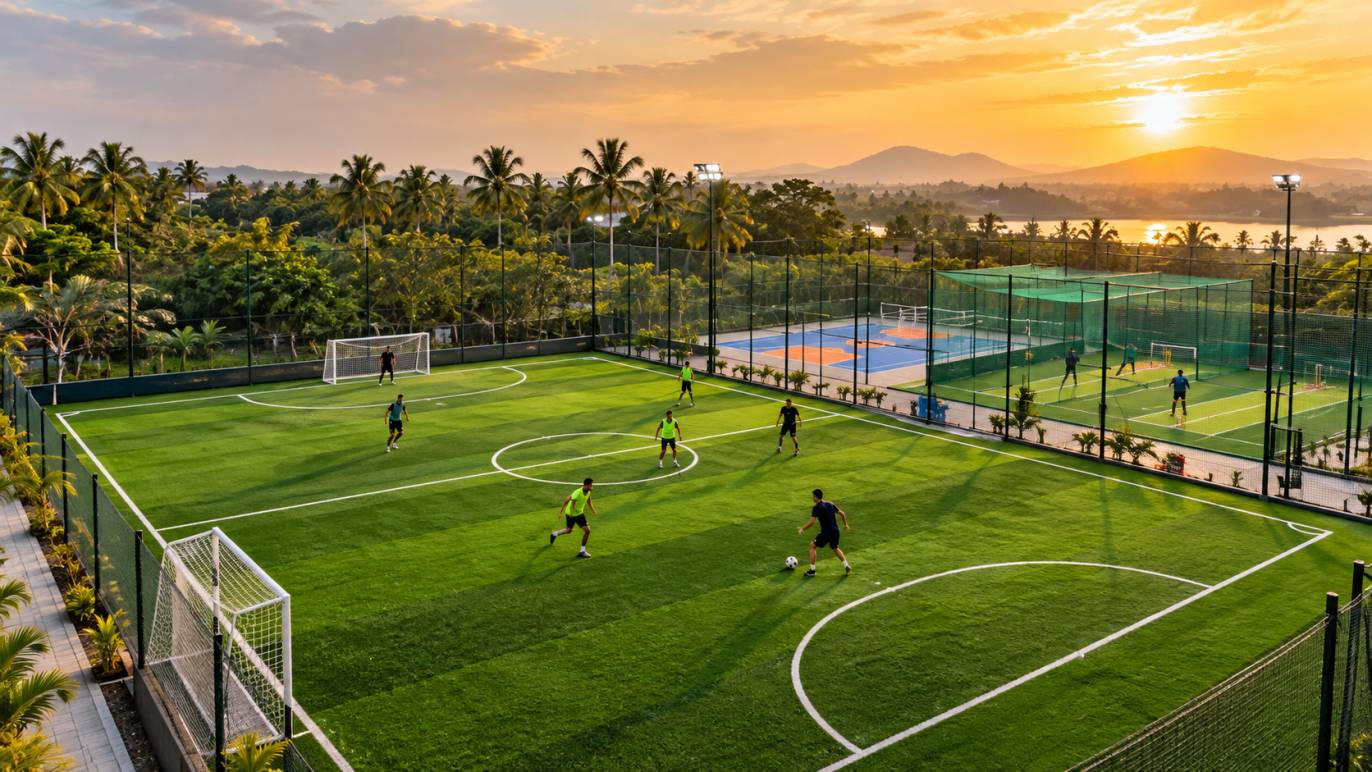
Urban land constraints and rising demand for diverse sports facilities have pushed developers toward multi-use turf concepts. The logic is simple: a single field or surface can host football training and matches, along with community nets, small-sided games, cricket practice, and other court-based activities. This approach expands utilization, improves return on space, and aligns with green-field and rehabilitation-friendly design practices increasingly seen in city planning efforts across Tamil Nadu and Kerala.
In Tamil Nadu, there are references to large-scale visions, such as state-level stadium plans and the development of new sports cities, that hint at broader, multi-sport ecosystems rather than a single-use focus. The Tamil Nadu government has publicly engaged in discussions around global sports city concepts and concept design approvals for large campuses, indicating a policy environment that can support multi-sport venues when aligned with urban planning timelines. In Kerala, coastal and urban centers face similar demand pressures for high-quality turf and practice facilities, as clubs and schools seek reliable surfaces that can endure tropical climates and heavy usage.
Market Signals in Tamil Nadu and Kerala: Stadiums, Global Sports Cities, and Community Arenas
Key signals in the region include:
High-profile Tamil Nadu initiatives around potential Global Sports City concepts, feasibility studies, and large campus designs that incorporate football, athletics, and related facilities. These signals point to a policy environment that values multi-sport campuses as anchors for urban development and community activation.
Chennai and its environs showing continued interest in expanding sports infrastructure, with concept designs and feasibility studies that contemplate football and other sports as core elements of new districts or campuses.
Smaller but meaningful projects, such as Tambaram’s planned sports arena near major bypass corridors, illustrate a trend toward accessible, mid-sized venues with a mix of sports offerings that include football and other court-based activities.
In Kerala, respected urban sports infrastructure projects and existing stadiums demonstrate demand for reliable turf surfaces in both training and competition settings, especially in urban submarkets where multi-use venues can serve schools, clubs, and community leagues.
Designing for Urban Contexts: Space, Access, and Usage
Urban projects succeed when they combine flexible design with robust maintenance plans. For Tamil Nadu and Kerala, practical multi-use turf facilities should consider:
Spatial efficiency: Compact football turf plus adjacent cricket nets or multi-use courts can maximize daily utilization, especially in densely populated city fringes and planned townships.
Access and scheduling: Modular surfaces and fencing, with clear zoning for practice nets, small-sided football, and court-based activities, can improve throughput and reduce scheduling conflicts.
Surface versatility: Selecting surfaces that perform under tropical climates, with appropriate drainage and sun-shading strategies, supports year-round use and reduces downtime.
Climate resilience: Maintenance strategies that address heavy rainfall and humidity can extend turf life and improve safety for players across youth and elite programs alike.
Investment Considerations: Revenue, Partnerships, and Risk
For developers and clubs considering Tamil Nadu or Kerala, there are several practical levers to evaluate:
Revenue models: Multi-use facilities tend to benefit from diversified streams, including turf rental for training, match hosting, school and college programs, corporate events, and community leagues. Surface investments should align with anticipated utilization to maximize recurring income.
Partnerships: Aligning with municipal authorities, school boards, local football associations, and corporate sponsors can unlock capital, reduce risk, and improve long-term viability. Public-private partnerships (PPPs) or semi-private concessions often require careful governance and clear performance milestones.
Asset lifecycle: No prices, warranties, or exact technical specifications are provided in this brief. Investors should seek verified specifications and service-level commitments from manufacturers and installers to ensure a predictable maintenance and replacement schedule that aligns with cash flow projections.
Risk management: Weather-related wear, maintenance costs, and scheduling conflicts are common operational risks. A robust maintenance plan and a transparent fee structure with users help manage these risks.
Operational Realities: Maintenance, Turf Choice, and Scheduling
Maintenance realities heavily influence the economics of turf facilities in South India. Shared usage, heavy monsoon seasons, and high humidity require:
Regular grooming and cleaning to prevent compaction and ensure consistent ball roll on football turf and training surfaces.
Drainage-first design and effective drainage systems to minimize downtime after rains, especially for practice nets and nearby courts.
Surface selection that balances cost, durability, and play characteristics suitable for football, cricket nets, and other uses without compromising safety.
Efficient maintenance scheduling that minimizes disruption to users while protecting equipment, nets, and fencing.
Case-Led Insights: Tamil Nadu Projects, Chennai Global Sports City, and Kerala Infrastructure
From the brief, several concrete signals emerge that could guide investor and operator thinking:
Tamil Nadu’s ongoing discussions around a Global Sports City concept in Semmancheri and related feasibility work suggest a policy and planning context that favors large multi-sport campuses. While timelines are not confirmed in the brief, the concept points to a potential demand driver for football turf and related facilities in the region.
Chennai’s engagement with a Global Sports City idea, including concept design approvals and feasibility work, indicates the value of anchors that combine football, athletics, and other sports. Developers can observe these signals for how to structure multi-use spaces, accessibility, and long-term financing.
Tambaram’s announced ₹40-crore sports arena near the Tambaram-Maduravoyal bypass demonstrates a trend toward mid-range, multi-discipline venues that can support football, athletics, tennis, badminton, volleyball, and more within nine acres. Such projects illustrate a practical scale for urban areas that would be attractive to community leagues and regional clubs.
In Kerala, existing league structures and urban sports facilities reinforce the demand for reliable turf surfaces that can accommodate football training and matches alongside other sports in a tropical climate with substantial rainfall. The market signals align with multi-use concepts designed for high utilization and steady revenue generation.
Practical Guidance for Developers and Clubs
If you are a developer or a club considering a site in Tamil Nadu or Kerala, here are actionable steps to move from concept to operation:
Define a clear utilization plan: Outline primary and secondary uses, such as football training, small-sided games, cricket nets, and court sports, and estimate daily throughput. Aim for a surface and layout that minimize idle time during weekdays and maximize weekend usage.
Engage stakeholders early: Connect with local football associations, school networks, and municipal bodies to align the project with community needs and potential sponsorship or funding opportunities.
Prioritize scalable design: Plan for modular expansion or reconfiguration, enabling you to adjust to demand shifts without large capital outlays.
Source verified specifications: Obtain confirmed surface types, installation practices, maintenance regimes, and warranties from trusted manufacturers and installers. Do not rely on unverified project claims; cross-check with project briefs and regulatory approvals.
Plan maintenance as an investment, not a cost: Develop a proactive maintenance calendar and budget that covers turf replacement timelines, netting repairs, fencing, and drainage systems to protect long-term asset value and uptime.
Define a robust revenue mix: Consider renting surfaces for training, hosting leagues and events, running coaching programs, and organizing community outreach. Create tiered pricing that reflects peak versus off-peak demand while ensuring accessibility for local clubs and schools.
Assess regulatory and environmental considerations: Tropical climates require effective water management and eco-friendly practices. Review local building codes, drainage standards, and sustainability certifications relevant to stadium or arena projects.
Implementation Roadmap: From Feasibility to Operations
A practical roadmap for launching a multi-use football turf and practice facility in Tamil Nadu or Kerala might look like this:
Feasibility assessment: Validate demand, identify potential users such as schools, clubs, and corporate groups, and map site constraints, including space, drainage, and access.
Concept design: Create a flexible layout with zones for football turf, practice nets, and courts. Plan for drainage and safety fencing, and incorporate shading and weather resilience as needed.
Financial modelling: Develop multiple scenarios for utilization, pricing, and capital outlay to determine break-even points and return on investment.
Partnerships and procurement: Secure commitments from governing bodies, sponsors, or educational institutions. Engage verified surface manufacturers and installers with clear service-level agreements.
Construction and commissioning: Implement the project according to plan, with staged handover of turf surfaces, nets, lighting, and gates. Establish a commissioning process and quality checks.
Marketing and operations: Launch a community outreach program, schedule leagues, and establish a membership or pass system. Set up maintenance protocols and a monitoring dashboard for uptime and wear.
Ongoing evaluation: Review utilization data, adjust programming, and plan for incremental improvements or expansions as demand evolves.
About Empower Sports and How We Help
Empower Sports specializes in B2B sports infrastructure design, manufacturing, and maintenance services tailored for South Indian markets. Our approach blends practical field operations with strategic investment thinking, helping clubs, schools, and developers turn multi-use turf concepts into sustainable, revenue-positive facilities. We offer:
Site assessments and design services for football turf, cricket practice nets, and multi-use courts.
Surface recommendations and installation oversight, with climate-appropriate solutions for Tamil Nadu and Kerala.
Maintenance planning, routine services, and lifecycle management to maximize uptime and asset value.
Partnership and program development support to secure sponsorships, school partnerships, and league opportunities.
Whether you are evaluating a greenfield site near Chennai, Coimbatore, Ernakulam, or a mid-sized urban area in Karnataka or Telangana, Empower Sports can tailor a plan that aligns with local market dynamics and community needs while preserving fiscal discipline and long-term value.
CONTACT US
Ready to explore a practical, scalable plan for a multi-use football turf and practice facility in South India? Contact Empower Sports to begin a structured feasibility and design engagement that translates market signals into a resilient, revenue-positive project. Let’s map a path from concept to operation that fits your city, budget, and community goals.
Empower Sports is committed to providing verified, actionable guidance. The claims and market signals referenced in this article are drawn from public briefings and press coverage and should be validated against current government announcements, project briefs, and supplier specifications before procurement decisions.