Why South India Is Attracting Integrated Sports Hub Plans
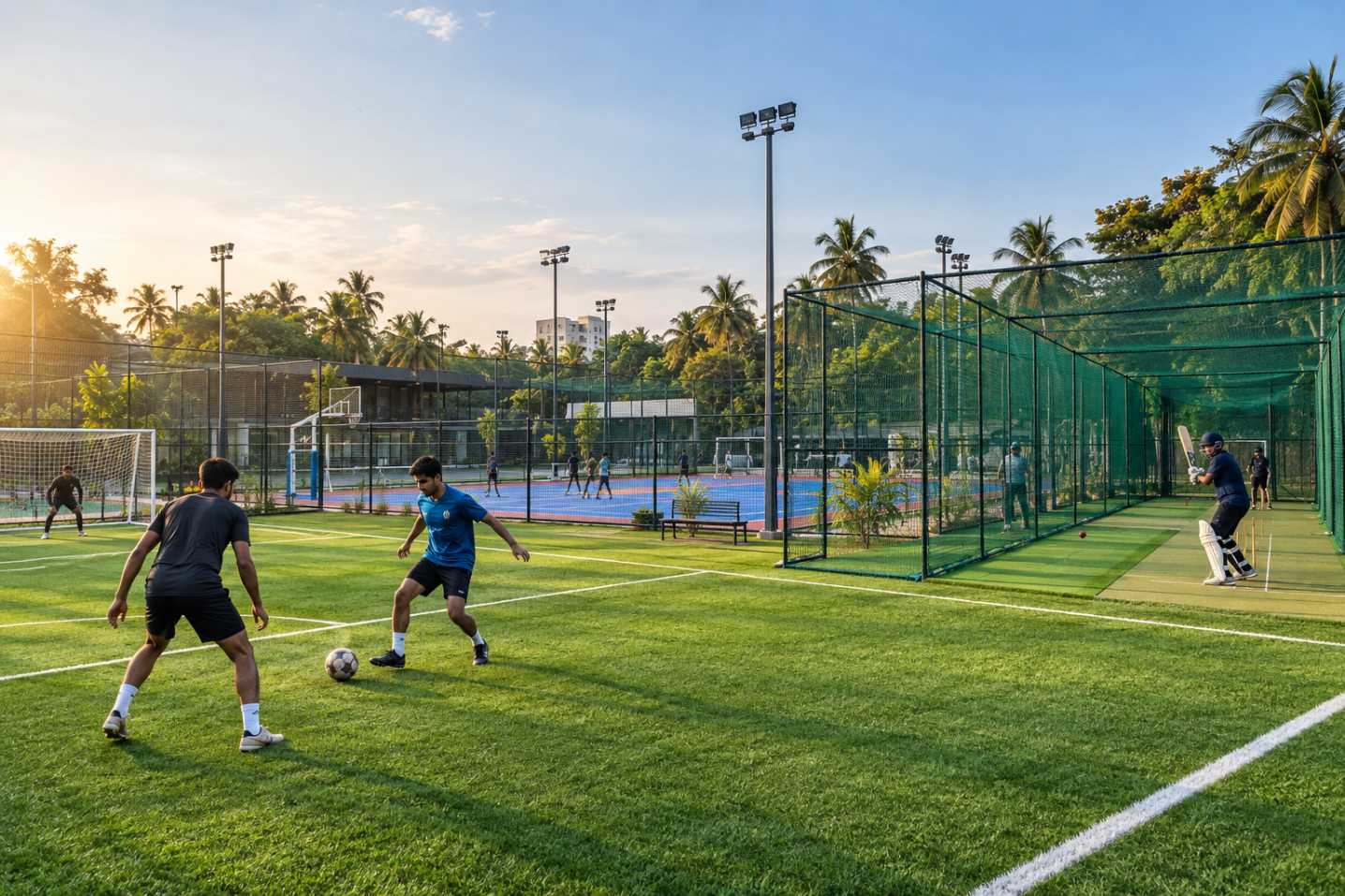
- Urban demand for year-round training facilities that can accommodate football and cricket practice within a compact footprint. In cities across Tamil Nadu and Tamil Nadu-adjacent markets, developers envision campuses that can host football turf, practice nets, and courts in a single site to maximize utilization days and drive revenue through memberships, rentals, and events.
- Government and private sector interest in eco-sensitive, flood-resilient, and climate-adaptive facilities. While specific project names may require verification, the concept of multi-use, resilient grounds aligns with regional planning attitudes toward responsible sports infrastructure development.
Key Components: Turf, Nets, Courts, and MAINTENANCE
FOOTBALL TURF and PITCHING: What Investors Are Hearing
Football turf quality directly affects footwork, injury risk, and session duration. Decisions typically center on:
- Surface type and pile height appropriate for training rather than elite competition; the goal is durability and multi-use functionality where possible.
- Drainage and flood resilience to minimize weather-related downtime; this is particularly relevant for coastal and semi-coastal Tamil Nadu and Kerala corridors where rainfall patterns influence field availability.
- Maintenance-friendly infill and seam design to extend life while keeping playing characteristics consistent across seasons.
CRICKET PRACTICE Nets: Design and Utilization in Urban Markets
Cricket nets have become a standard feature in urban training complexes, enabling drop-in practice, coach-led sessions, and club-level matches. Practical considerations include:
- Net dimensions, safety clearances, and windbreaks that support both batting practice and bowling drills without compromising nearby activities.
- Persistently stable netting materials that resist weather exposure and require manageable maintenance cycles.
- Compact net configurations that maximize throughput of players per hour while maintaining safety and coaching effectiveness.
ARTIFICIAL TURF and Multi-Pac Courts: Durability and Demand
Beyond pure natural turf considerations, artificial turf and multi-purpose courts are increasingly seen as essential for multi-sport hubs. Considerations include:
- Hard-wearing court surfaces that can handle basketball/tennis playlists alongside small-sided football drills and cricket nets in the same campus.
- All-weather accessibility and low-maintenance cleaning regimes that help keep courts usable year-round, a critical factor in southern climates with heavy rainfall seasons.
- Compatibility between court materials and adjacent turf to minimize wear and maintenance conflicts, especially in high-usage scenarios.
Regulatory and Market Realities: What Is Verified and What Isn’t
Important to any investment thesis is distinguishing confirmed information from speculative or unverified claims. The following points reflect verified or broadly acknowledged considerations, with clear flags when claims require further validation:
- Urban hubs in the South are increasingly focused on multi-use campuses that combine football, cricket, and court-based play. This aligns with the broader goal of maximizing utilization and driver revenue, though exact project approvals, budgets, and timelines should be confirmed with official sources or project owners.
- Climate resilience, flood mitigation, and eco-sensitive design appear as recurring themes in major Southern regional developments. Specific designs and approvals may vary by jurisdiction and project owner; verify through municipal or state government releases.
- Market-level dynamics—such as the demand for training infrastructure in Tamil Nadu, Kerala, Karnataka, Telangana, and Andhra Pradesh—are reflected in industry discussions, but granular data (e.g., market size, CAGR) cited by third-party reports requires corroboration from primary market data and local authorities.
Case-Study Inspired Insights: Tamil Nadu and Other Southern Markets
Recent media coverage and industry commentary reveal several strands relevant to investors and operators in South Indian markets:
- Chennai’s upcoming Global Sports City in Semmancheri has received concept design approval from the Tamil Nadu government. The project envisions a large-scale sports ecosystem and eco-sensitive, flood-resilient features. While this signals government interest in multi-facility sports developments, the practical implications for smaller operators focus on replicable models: integrated training spaces, resilient design, and connectivity with local clubs and schools. (Source: media coverage of the Semmancheri concept design approval)
- Regional markets are exploring the role of turf protection, maintenance practices, and supply chains in delivering durable training surfaces. While a quantified market size is not provided here, the emphasis on durable, low-downtime facilities is a common thread across credible industry discussions.
- Global or city-level sports hubs emerging in other Indian regions provide useful benchmarks for the operational playbook, especially when considering how maintenance planning, surface selection, and court scheduling can scale with demand in Southern urban centers.
Practical Investment Playbook: From Due Diligence to Operations
If you are a senior executive evaluating a South Indian sports infrastructure project, consider this practical, non-prescriptive checklist. The aim is to structure your due diligence, not to prescribe exact specifications.
- Market-fit assessment: Map demand signals from schools, clubs, and corporate sponsors in your target city (e.g., Chennai, Bengaluru, Kochi, Hyderabad outskirts) to determine the balance of turf, nets, and courts that a campus should offer.
- Site and footprint planning: Prioritize a footprint that supports multiple training zones with clear separation for safety and scheduling. Confirm drainage, flood resilience, and accessibility to reduce downtime during the monsoon season.
- Turf and surface strategy: Engage with turf specialists to understand lifecycle costs, maintenance windows, and compatibility with cricket practice nets and court areas. Avoid overcommitting to a single-use surface if multi-use is a business objective.
- Nets and safety: Design net arrangements that optimize throughput while meeting coaching needs and safety standards. Ensure there is enough clearance around nets to support warm-ups and drills simultaneously.
- Courts as multipurpose assets: Choose court surfaces with multi-sport usability (e.g., basketball, badminton, tennis) to maximize utilization. Plan for safe access routes and shade considerations in hot southern climates.
- Maintenance planning: Build a maintenance calendar that aligns with monsoon patterns and peak usage. Consider preventative maintenance cycles and spare parts inventory to reduce downtime and extend asset life.
- Financing and partnerships: Explore a mix of equity, long-term leases, and sponsorship deals. Engage with local schools, clubs, and corporate partners early to secure anchor users and revenue streams.
- Regulatory alignment: Confirm land-use approvals, building codes, and environmental clearances as applicable to your city and district. Ensure your design aligns with any local flood-prevention or eco-sensitive design guidelines.
EMPOWER SPORTS: Enabling South Indian Sports Infrastructure Growth
Empower Sports stands ready to support developers, clubs, and municipal agencies seeking to build or upgrade integrated training hubs in South India. Our approach prioritizes practical, scalable designs that balance turf performance, netting safety, and court usability with ongoing maintenance discipline. We provide advisory services, surface and facility surveys, and actionable implementation roadmaps tailored to your city’s climate and market needs. We can help translate high-level plans—such as multi-sport hubs or eco-resilient campuses—into dependable, cost-conscious operations.
Connect with EMPOWER SPORTS for Custom Solutions
If you are considering a South Indian training campus or a city-scale sports hub, talk to Empower Sports about a custom, site-specific plan. We can:
- Assess turf options and maintenance strategies suitable for football and cricket use in your city.
- Review netting configurations and safety standards for cricket practice facilities.
- Recommend court materials and layouts that support multi-sport usage and year-round play.
- Provide a phased rollout plan aligned with budget, timelines, and sponsor activation opportunities.
Reach out to Empower Sports to start your tailored feasibility study and implementation roadmap. Your hub’s potential is not just about a pitch or a net—it’s about how these assets work together to keep athletes training, clubs thriving, and communities engaged.