
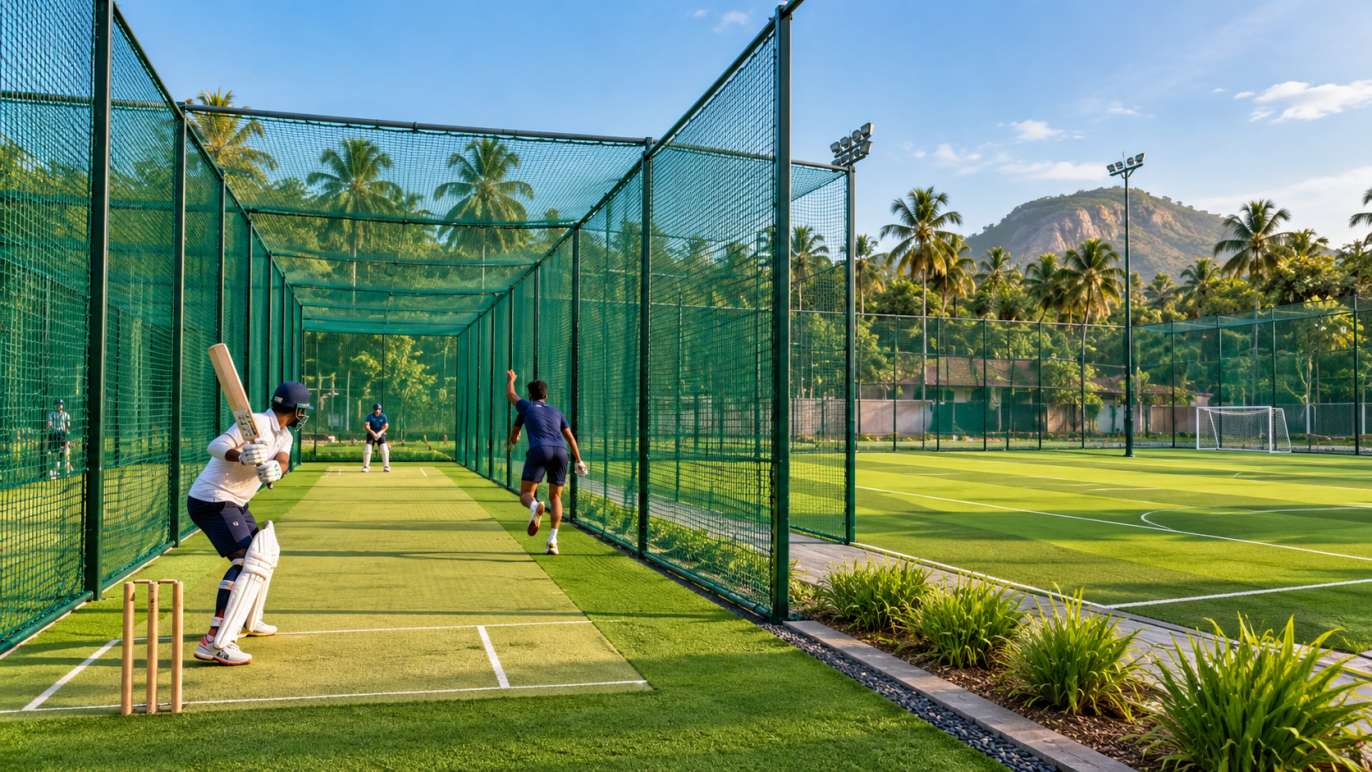
South India’s Next Big Play: Scalable CRICKET PRACTICE NETS and Multi-Use Turf
Why CRICKET PRACTICE NETS Are a High-Value Entry Point in South Indian Markets
- Rapid deployment: Modular nets and surface systems can be installed faster than traditional brick-and-mortar facilities, enabling clubs to scale their offerings quickly in urban pockets and growing townships.
- Multi-use value: Turf surfaces that support both cricket practice and football or futsal drills maximize utility per square meter, a critical factor for municipal or school facilities with multi-sport mandates.
- Maintenance considerations: Surface choices that prioritize durability and ease of maintenance reduce lifecycle costs—an important factor for budget-conscious institutions and local government bodies.
- Community and school usage: Facilities designed for flexible use tend to attract more programs, coaching partnerships, and sponsorship opportunities, contributing to a more sustainable business model.
Market Signals from Tamil Nadu, Kerala, Karnataka, Telangana, and Andhra Pradesh
- Tamil Nadu: There are reports about stately stadium planning and broader sports-venue alliances, indicating ongoing attention to scalable, multi-use infrastructure in the state. While the article itself is not a technical feasibility brief, it signals a market that prioritizes modern, flexible facilities where modular nets and turf systems could be integrated into upcoming projects or retrofit programs.
- Kochi/Central Kerala: An established sporting hub concept and a 25-year milestone for a regional sporting center illustrate Kerala’s appetite for quality facilities. The implication for modular cricket nets is that high-quality, durable, quickly deployable training spaces could complement the region’s existing and planned venues, particularly in urban and semi-urban centers.
- General turf market signals: Turf protection and maintenance considerations continue to be relevant in the broader market, underscoring the importance of selecting turf systems with robust maintenance support and lifecycle value for operators in India’s tropical climate.
- South Indian urban markets: The combination of stadium planning signals and a mature sports culture suggests opportunity for mid-market facilities (schools, clubs, municipal sports facilities) to invest in modular nets and multi-use turf that deliver consistent performance and lower total cost of ownership.
The Value Proposition: MODULAR NETS, Multi-Use Turf, and Maintenance Considerations
- Speed to market: Projects that leverage modular nets and ready-to-install turf systems can be delivered in weeks to a few months, enabling faster ROI cycles for clubs and institutions.
- Space efficiency: Multi-use turf reduces the need for separate dedicated spaces for football and cricket, a critical advantage in urban centers where land is at a premium.
- Cost discipline: While exact prices vary by specification, modular systems generally enable clearer budgeting, predictable maintenance, and easier lifecycle management than bespoke solutions.
- Durability and climate readiness: In South India’s tropical climate, selecting surfaces with proven wear characteristics and local maintenance support is essential for long-term performance and cost containment.
Operationally, projects can be designed to meet a range of scales—from compact nets that occupy a single court or corner of a recreational ground to larger, stand-alone practice facilities with multiple nets and integrated turf run-offs for batting nets and fielding practice. The emphasis should be on modularity, interoperability with existing facilities, and service agreements that guarantee uptime and maintenance commitments.
Operational Models for Clubs, Schools, and Municipalities
There are several practical configurations that South Indian buyers can consider. These models prioritize ease of procurement, local service availability, and lifecycle ownership:
- Club or academy packages: A modular cricket nets system with a compact turf panel layout, designed for year-round training and camps. This model emphasizes fast installation, club branding, and flexible scheduling to maximize usage.
- School and college facilities: A school-friendly package that combines cricket nets with a turf strip suitable for football drills (e.g., small-sided games, warm-ups). The focus is on safety, low maintenance, and integration with existing physical education programs.
- Municipal or district facility upgrades: A broader package that can retrofit or augment existing public spaces with modular nets, value-engineered turf surfaces, and maintenance contracts. This approach aims to deliver public value, community programs, and long-term asset resilience.
- Hybrid sports hubs: A scalable design that can evolve over time—starting with cricket nets and a small turf area, followed by expansion into broader turf-based training zones. This staged approach reduces upfront risk and aligns with municipal budgeting cycles.
In all cases, it’s important to pair the nets with a turf system that supports multi-use functionality—ensuring the same surface holds up to cricket capturing, ball rebound, and football drills without excessive maintenance burdens.
Risks, Verification Flags, and Due Diligence
To avoid overpromising, operators should approach with measured expectations and robust due diligence. Potential risk areas include:
- Quality variability: Modular nets and turf systems come in a range of quality levels. Verify product certifications, installation practices, and after-sales service commitments.
- Maintenance obligations: Maintenance needs can be location- and climate-dependent. Request clear service-level agreements and guidance for routine maintenance, including cleaning, infill replacement, and surface refurbishment schedules.
- Local regulatory and procurement constraints: Municipalities often have specific procurement rules and compliance requirements. Confirm the approval pathway, tendering process, and any local labor or vendor registration requirements.
- Lifecycle costs: While modular systems can reduce upfront costs, long-term maintenance and replacement cycles should be modeled to avoid surprises in years 5–10.
Empower Sports can help clients navigate these risk areas by offering transparent product literature, test data, and a clear maintenance framework that aligns with South Indian climates and usage patterns.
Implementation Roadmap for EMPOWER SPORTS Partners
A practical, phased approach for market entry and project delivery includes the following steps:
- Discovery and needs assessment: Engage with clubs, schools, and municipalities to understand space, usage patterns, and budget constraints. Document desired outcomes (e.g., number of nets, square footage of turf, intended multi-use programming).
- Technical validation: Align modular net specifications with turf system choices that tolerate cricket ball impact and football drills. Ensure compatibility with local maintenance capabilities and spare parts availability.
- Commercial packaging: Create tiered packages (starter, standard, premium) with clearly defined scopes, service levels, and expansion paths. Include optional maintenance add-ons to support lifecycle value.
- Local partnerships: Build a network of installers, maintenance service providers, and warranty partners to ensure reliable on-ground delivery and ongoing support.
- Pilot projects: Implement small pilots in select markets (e.g., Coimbatore, Kochi, Mysuru, Bengaluru outskirts) to demonstrate ROI and operational viability before larger rollouts.
- Impact measurement: Track usage hours, maintenance costs saved, and community engagement metrics to demonstrate value to stakeholders and potential sponsors.
Editorial Perspective: What This Means for Your Growth Strategy
From a strategic standpoint, the modular cricket nets plus multi-use turf concept aligns with several growth levers for Empower Sports and its South India growth agenda:
- Market acceleration in tier-2 and tier-3 cities: Beyond metros, expanding into thriving regional markets can unlock early-adopter advantages and create a broader reference base.
- Public-private collaboration opportunities: With municipal facilities and school programs often seeking cost-effective upgrades, the value proposition centers on shared use, sustainability, and long-term maintenance guarantees.
- Brand differentiation through service excellence: A transparent maintenance framework, consistent post-installation support, and examples of successful pilots can differentiate Empower Sports in a crowded market.
It should be noted that while the brief references Tamil Nadu stadium planning and Kerala’s established sports hubs, this article remains anchored in practical, deployable offerings with a focus on a credible multi-use solution that respects local realities and procurement processes.
Partner with EMPOWER SPORTS to Build Scalable CRICKET AND TURF SOLUTIONS
If you are a club administrator, school administrator, or municipal facilities manager seeking scalable, multi-use training spaces, Empower Sports offers a modular cricket nets and turf solution designed for rapid deployment, predictable maintenance, and long-term value. Contact our South India team to discuss needs assessment, pilot opportunities, and tailored packaging that aligns with your budget and timelines. Let’s convert underutilized spaces into sustainable training hubs that support cricket, football, and community engagement.
To start a conversation, reach out via our India operations channel or your regional sales contact. Empower Sports is prepared to help you scope, finance, and deploy a system that delivers measurable training outcomes and asset resilience.