Tamil Nadu’s Global Sports City: A Fresh Playbook for FOOTBALL TURF and Multi-Sport Infrastructure
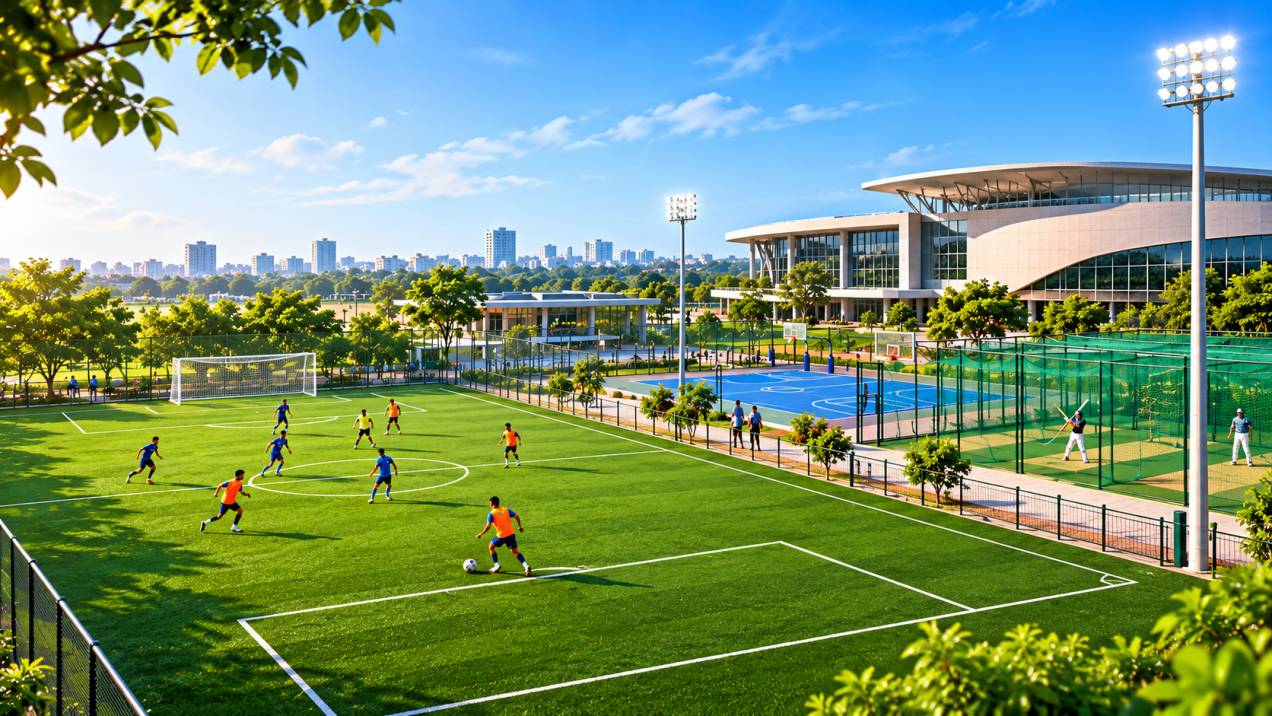
As Tamil Nadu explores the development of a flagship Global Sports City near Chennai, the initiative represents more than just a stadium or sports arena. The proposed project, centred around Semmancheri in the Chennai metropolitan area, is envisioned as a comprehensive sports facility that could accommodate football, cricket practice, and other sporting activities through a multi-use campus.
While the exact scope, timelines, and specifications are still evolving, the project presents interesting opportunities for private investors, infrastructure developers, and sports facility operators. It also offers a potential model for other South Indian markets, including Kerala, Karnataka, Telangana, and Andhra Pradesh, where demand for football and cricket infrastructure continues to grow.
Why Semmancheri and Chennai Matter for FOOTBALL TURF and Practice Facilities
The Tamil Nadu government’s focus on developing a Global Sports City near Chennai appears to be progressing towards formal feasibility studies. According to project information, the Chennai Metropolitan Development Authority (CMDA) has floated tenders to appoint consultants for feasibility studies and Detailed Project Report (DPR) preparation.
Although the final project scope and implementation plans remain subject to change, the initiative highlights growing interest in large-scale, multi-sport infrastructure with the potential to generate sustainable commercial revenue.
Semmancheri’s location within the Chennai metropolitan region offers access to a large population of sports enthusiasts, academies, educational institutions, and professional organisations. A well-planned Global Sports City could bring training, sporting events, and athlete development programmes together within a professionally managed campus.
For stakeholders in Kerala, Karnataka, Telangana, and Andhra Pradesh, this model could offer valuable insights into developing modern sports infrastructure, particularly in cities experiencing increasing demand for football turfs, cricket practice nets, and multi-sport facilities.
Market Signals: FOOTBALL, CRICKET PRACTICE NETS, and Multi-Sport Demand in South India
South India’s sports ecosystem presents several opportunities for developing modern and professionally managed sporting facilities.
Some of the emerging infrastructure requirements include:
Football turf facilities: Demand for quality football turfs and enclosed training environments that support year-round practice, particularly in urban and semi-urban locations.
Cricket practice nets: Growing interest in professionally designed cricket training facilities for academies, clubs, schools, and high-performance programmes.
Multi-sport campuses: Increasing interest in facilities that accommodate coaching, leagues, tournaments, academies, and corporate sporting events.
Professional sports management: Greater demand for reliable maintenance, safety standards, and operational management to ensure long-term facility performance.
In Tamil Nadu, the proximity to major urban economies, universities, and corporate employment centres creates opportunities for developing organised sports ecosystems.
Similar opportunities exist across South India, particularly in Kerala’s growing sports communities, Karnataka’s metropolitan corridors, Telangana’s expanding sports infrastructure, and Andhra Pradesh’s developing urban centres.
Across these markets, the requirement remains consistent: reliable, well-maintained, legally compliant sports facilities that can attract long-term partnerships, sponsorships, and sporting programmes.
The Opportunity Matrix: Turf, NETS, Courts, and MAINTENANCE
1. Football Turf
Modern football turf facilities require durable, safe, and climate-appropriate playing surfaces capable of handling intensive daily usage. Proper installation, drainage, shock absorption, and surface quality are essential for maintaining consistent playing conditions.
Cricket training facilities need professionally designed enclosures with wind-resistant structures, appropriate netting, adequate lighting, and dedicated batting and bowling practice areas.
3. Sports Courts and Multi-Use Spaces
Multi-purpose courts can accommodate basketball, futsal, badminton, and other sporting activities. Modular facility planning allows operators to maximise space utilisation and attract different customer segments.
4. Turf Maintenance and Operations
Regular maintenance is essential for extending the lifespan of sports infrastructure. This includes surface inspections, cleaning, wear management, drainage maintenance, and timely repairs or replacement.
For developers and operators, the strategic priority should be to create facilities that balance performance, safety, operational efficiency, and long-term commercial viability.
A combination of dedicated sporting areas and flexible multi-use spaces can help accommodate seasonal demand, school leagues, corporate events, and private bookings.
Practical Guidance for Investors and Contractors
Design and Site Considerations
Developing a successful sports campus requires careful planning, appropriate infrastructure selection, and an understanding of local environmental conditions.
Key considerations include:
Urban campus design: Develop a central facilities hub with dedicated practice zones to improve accessibility and maximise space utilisation.
Climate resilience: Account for South Indian weather conditions through effective drainage systems, weather-resistant materials, and appropriate heat-management strategies.
Safety and compliance: Ensure fencing, lighting, sports enclosures, and playing surfaces meet applicable safety requirements and sporting guidelines.
Infrastructure scalability: Design facilities that can accommodate future expansion, additional sports, and changing operational requirements.
For the proposed Tamil Nadu Global Sports City, feasibility studies and the detailed project report will play an important role in determining the final footprint, investment requirements, and development phases.
A phased implementation approach could help stakeholders validate demand and operating models before committing to a larger infrastructure investment.
Revenue and Partnerships: Building a Sustainable Business Model
A successful sports infrastructure project should generate revenue through multiple channels rather than depending exclusively on facility rentals.
Potential revenue opportunities include:
Training programmes and professional coaching academies.
Football and cricket tournaments and league competitions.
School and college sports partnerships.
Corporate sporting events and recreational programmes.
Sponsorships and commercial partnerships.
Membership packages and hourly facility rentals.
Partnerships with football clubs, cricket academies, educational institutions, and sports organisations can help improve occupancy and create long-term business opportunities.
Maintenance should also be considered an essential part of the business model. Regular turf maintenance, timely repairs, and efficient facility management help protect the initial investment while ensuring consistent playing conditions.
For investors, the objective should be to align infrastructure design with predictable revenue opportunities while maintaining control over long-term operating costs.
Why Empower Sports? How We Help Bring Projects to Life
Empower Sports provides end-to-end expertise in football turf development, cricket training nets, and multi-sport infrastructure, with solutions designed around India’s climate, operational requirements, and regional market conditions.
We work with developers, municipal bodies, educational institutions, and private sports facility operators to transform infrastructure concepts into practical, professionally managed sporting environments.
Our services include:
Sports infrastructure planning and design: Planning football turfs, cricket practice nets, and multi-use courts with a focus on performance, safety, and durability.
Installation and contractor coordination: Supporting the selection and coordination of suitable materials, vendors, and installation teams.
Turf maintenance and lifecycle management: Developing maintenance strategies that protect playing surfaces, extend asset life, and maintain consistent performance.
Sports facility development consultancy: Providing guidance on infrastructure planning, facility utilisation, revenue opportunities, and operational requirements.
Whether it is Tamil Nadu’s proposed Global Sports City or a privately developed sports facility in Kerala, Karnataka, Telangana, or Andhra Pradesh, Empower Sports brings practical industry knowledge to every stage of infrastructure development.
Our approach focuses on separating verified project information from emerging opportunities and developing infrastructure solutions that can scale sustainably.
Next Steps: Building the Future of Sports Infrastructure in South India
For developers, city planners, sports organisations, and investors considering a Global Sports City or regional multi-sport campus, the first step is to evaluate market demand, site suitability, infrastructure requirements, and long-term operating costs.
Engaging with feasibility consultants, regulatory authorities, potential tenants, and infrastructure specialists at an early stage can help establish a realistic development strategy.
A phased approach, supported by professional planning and maintenance, can help transform ambitious sports infrastructure concepts into sustainable sporting destinations.
Empower Sports can help bring your vision to life.
From football turfs and cricket practice nets to multi-sport courts and ongoing maintenance, our team can help you plan and develop sports infrastructure that meets modern performance and operational standards.
Contact Empower Sports today to discuss your project, arrange a discovery call, and explore customised solutions for your sports infrastructure requirements in Tamil Nadu and across South India.