
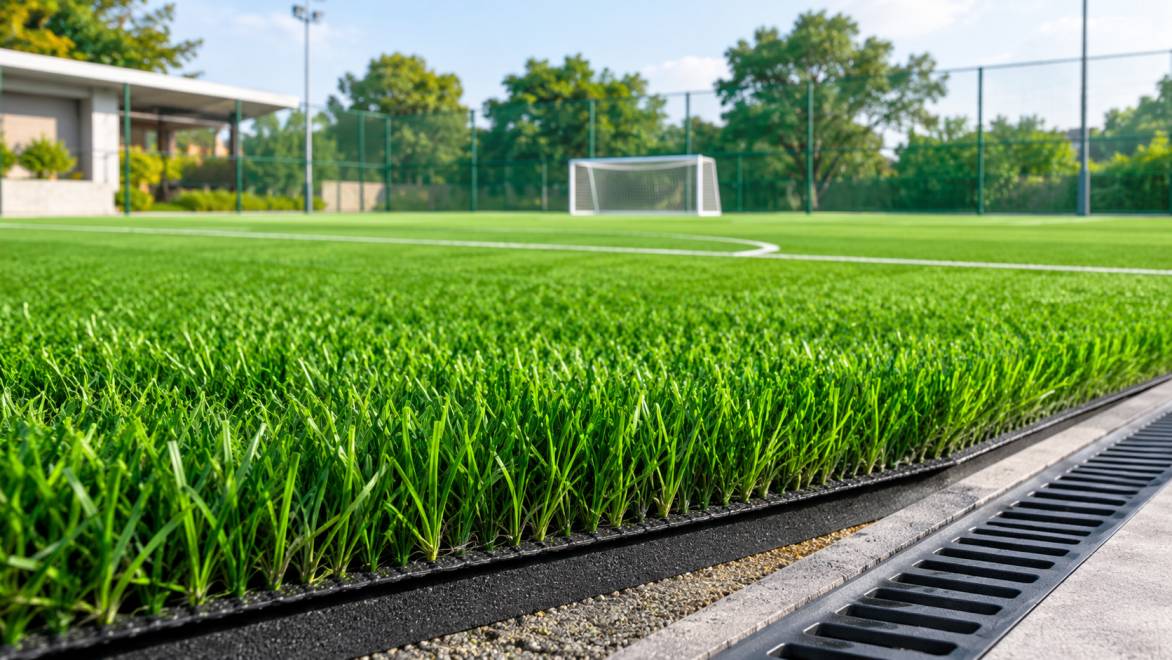
Artificial grass is now one of the most popular surfaces in India, from football turfs and box cricket arenas to home gardens and balconies. But not all artificial grass is the same. A turf that works well for a five-a-side football ground will feel wrong in a garden, and a soft landscaping lawn will wear out quickly under studs and daily matches.
This guide explains how to choose artificial grass in India for your specific project, covering pile height, drainage, installation, maintenance and the factors that affect cost, so you can compare quotes with confidence.
Step 1: Decide What the Grass Is For
The first question is not “which grass is best?” but “what will happen on it?” Different uses need very different products.
- Football turf: needs durable, UV-stabilised yarn, a firm base and usually sand or rubber infill to cushion falls and support the blades.
- Cricket practice areas and box cricket: need a dense, stable surface with predictable ball behaviour, and the right base for bounce.
- Gardens and landscaping: prioritise a natural look, softness and colour variation over impact resistance.
- Balconies and terraces: need lightweight, quick-draining grass that works on a hard surface with the right underlay.
If you are building a sports facility, see our work on football turf construction and box cricket setups for how these surfaces are planned from the ground up.
Step 2: Understand Pile Height
Pile height is the length of the grass blades, usually measured in millimetres. As a general rule:
- Sports use (football): longer pile, commonly in the 40 to 50 mm range, so the blades can hold infill and absorb impact.
- Cricket and multi-sport areas: shorter, denser pile for more consistent ball roll and bounce.
- Gardens: a medium pile gives a natural, soft look without being hard to maintain.
- Balconies: a shorter pile is lighter, cleaner and easier to keep tidy.
These are typical ranges, not strict rules. The right figure depends on the sport, the infill and the product, so always ask your supplier for the specification sheet.
Step 3: Check Yarn Quality and UV Protection
India’s sun is harsh, and in much of South India it is combined with heavy monsoon rain. Cheap yarn fades, turns brittle and flattens within a few seasons. When comparing products, ask about:
- UV stabilisation, which prevents colour fading and brittleness.
- Yarn material and shape, which affect softness and how well blades stand back up.
- Backing quality, which holds the blades in place and affects how water drains.
- Warranty terms, and what exactly they cover.
Step 4: Plan Drainage Properly
Drainage is where many installations fail, especially in regions with strong monsoons such as Kerala. Good drainage is not only about the grass. It starts with the ground below it.
- The grass backing should be perforated so water passes through.
- The base layers (compacted aggregate and fine stone dust) should let water move freely.
- The surface should have a slight slope toward drains or the edges.
- On balconies and terraces, the existing floor slope and outlets must be checked before installing.
Poor drainage leads to standing water, algae, bad smells and a surface that sinks over time. Local rainfall and soil type should always shape the base design.
Step 5: Choose the Right Infill
Infill is the material spread between the blades. It supports the grass, protects the backing and affects how the surface feels.
- Football turf: sand and rubber infill are common for cushioning and stability.
- Landscaping: often needs little or no infill, depending on the product.
- Cricket: infill choice depends on the surface design and how the ball should behave.
Ask your installer which infill is planned and why. It affects both performance and long-term maintenance.
Step 6: Know How Installation Works
Quality installation is as important as the grass itself. A typical project follows these stages:
- Site assessment: measuring the area, checking levels, drainage and access.
- Excavation and levelling: removing soil and grading the surface.
- Base preparation: laying and compacting aggregate and stone dust layers.
- Laying the turf: rolling out, cutting, joining seams and fixing the edges.
- Infill and finishing: spreading infill, brushing the blades and final checks.
Rushed base preparation is the most common cause of uneven, sinking turf. Ask to see the plan for each stage before you approve a quote.
Step 7: Plan for Maintenance
Artificial grass is low maintenance, not no maintenance. Simple habits keep it looking good and extend its life:
- Remove leaves and debris regularly.
- Rinse dust off with water, especially in dry seasons.
- Brush the blades to keep them upright and spread infill evenly.
- Check for moss or algae in shaded, damp spots during the monsoon.
- Top up infill on sports turf when it thins out in high-traffic zones.
- Clean spills and pet waste quickly.
What Affects the Cost of Artificial Grass in India?
Prices vary widely, so comparing quotes means comparing specifications, not just the rate per square foot. The main cost factors are:
- Grass quality: yarn type, density, pile height and UV protection.
- Project size: larger areas usually lower the cost per square foot.
- Site condition: excavation, levelling and drainage work add cost.
- Base and infill: sports surfaces need more preparation than a garden.
- Extras: fencing, lighting, nets, goalposts and edging.
- Location and logistics: transport and labour differ across Kerala, Hyderabad and other regions.
Always ask for a written quote that lists materials, base work and warranty, so you can compare like with like.
Common Mistakes to Avoid
- Using garden-grade grass on a sports surface.
- Choosing the cheapest option without checking UV protection or warranty.
- Skipping drainage planning in high-rainfall areas.
- Installing directly over uneven ground with a weak base.
- Ignoring maintenance until the surface is already damaged.
Frequently Asked Questions
Is artificial grass suitable for Indian weather?
Yes, if you choose UV-stabilised grass with proper drainage. Strong sun and monsoon rain are manageable with the right product and installation.
How long does artificial grass last?
Lifespan depends on quality, usage and maintenance. A good surface that is installed and cared for properly can last for many years, while low-grade grass in heavy use wears out much sooner. Always check the warranty.
Can I use the same grass for sports and a garden?
Not ideally. Sports turf is built for impact and durability, while landscaping grass is designed for look and feel. Using the wrong type shortens its life or hurts performance.
Can artificial grass be installed on a balcony or terrace?
Yes. It needs a clean, level surface with working drainage, and a lighter, shorter-pile product is usually the best fit.
How do I clean artificial grass?
Remove debris, rinse with water, brush the blades and treat damp or shaded areas for moss. Sports turf may also need infill topped up.
Plan Your Artificial Grass Project with Empower Sports
Empower Sports is a South India-based provider of sports turf construction and artificial grass for landscaping, with projects across football, cricket, badminton and tennis, and presence in Kannur, Kochi and Hyderabad. Whether you are building a turf ground or upgrading a garden, our team can help you choose the right specification for your site and budget.
Contact us for a consultation and we will help you plan your project from site assessment to installation.